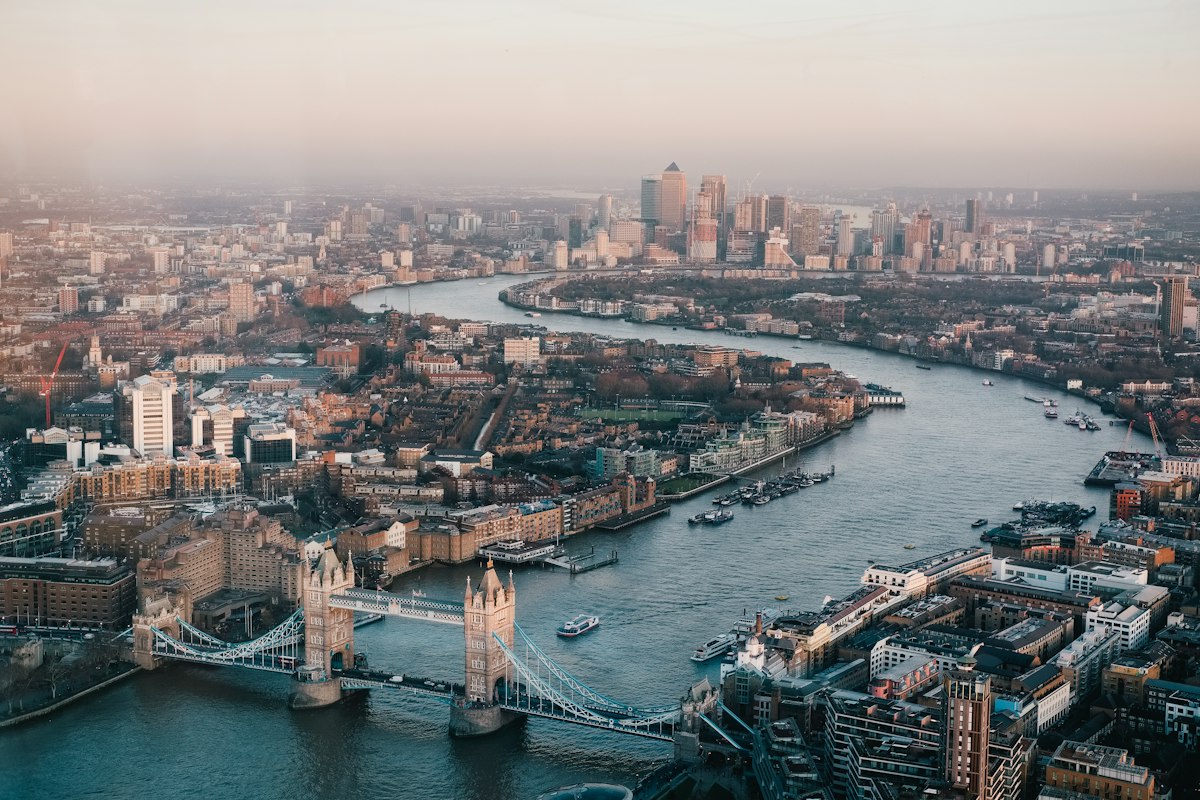
Few buildings in the world carry the weight of history as visibly as the Tower of London. Rising from the north bank of the Thames just east of the City of London, this formidable fortress has served as royal palace, state prison, place of execution, royal mint, and — most enduringly — the home of the Crown Jewels. Its stone walls, more than nine metres thick in places, have witnessed nearly a millennium of the events that made Britain what it is today.
The Norman Foundation
The Tower's story begins in 1066, with the Norman Conquest of England. William the Conqueror, newly crowned King of England, needed to establish his authority over a potentially hostile London population. He ordered the construction of a wooden fortification on the Thames, which was subsequently replaced by the great stone White Tower — the original keep that still stands at the heart of the complex today. Built from Caen stone imported from Normandy and completed around 1100, the White Tower was the tallest building in England at the time of its construction, deliberately designed to dominate and intimidate the surrounding city.
A Palace and a Prison
In its early centuries, the Tower functioned primarily as a royal palace. English monarchs regularly held court within its walls, and it was substantially expanded by successive rulers — Richard I, Henry III, and Edward I all added towers, walls, and buildings that transformed the original keep into the concentric fortress that survives today. But alongside its palatial function, the Tower quickly acquired a darker role. The first recorded political prisoner — Ranulf Flambard, Bishop of Durham — was held here in 1100. He also became the Tower's first escapee, lowering himself from a window by a rope smuggled in a cask of wine.
The Tudor Executions
The Tower's most notorious period came during the Tudor dynasty, when it became the preferred instrument of royal political justice. Anne Boleyn, the second wife of Henry VIII, was imprisoned in the Tower in May 1536, charged with adultery and treason — charges widely regarded by modern historians as fabricated. She was beheaded on Tower Green on 19 May 1536. Thomas More, Catherine Howard, Lady Jane Grey, and Thomas Cromwell were among the dozens of prisoners who lost their lives within or just outside the Tower's walls. Their stories have embedded themselves permanently in the popular imagination, giving the Tower its enduring association with power, betrayal, and mortality.
The Crown Jewels
Since 1303, when a daring theft of royal treasures from Westminster Abbey prompted a change of location, the Tower has been the home of the Crown Jewels of England and later the United Kingdom. The collection today includes the Imperial State Crown — set with over 2,800 diamonds, including the famous Black Prince's Ruby — and the Sovereign's Sceptre with Cross, which contains the First Star of Africa, the largest clear-cut diamond in the world. More than two million people visit the Jewel House each year, making it consistently one of the most popular attractions in Britain.
The Yeomen Warders
The Tower's iconic guardians, the Yeoman Warders — popularly known as Beefeaters — have protected the fortress since at least 1485. Recruited from the ranks of senior non-commissioned officers of the British armed forces, they must have completed 22 years of service before applying for the role. Today, they serve as both ceremonial guardians and official guides, leading daily tours that bring the Tower's extraordinary history to life with wit, erudition, and occasional theatrical flair.
The Ravens
By royal decree, a minimum of six ravens must reside at the Tower at all times. Legend holds that if the ravens ever leave, the Tower and the kingdom will fall. Whether one gives credence to the prophecy or not, the ravens — currently numbering eight, each with an individual name and personality — remain one of the Tower's most beloved features. Their wings are clipped to prevent them from flying away, a precaution that strikes some visitors as simultaneously sensible and faintly absurd.
A UNESCO World Heritage Site since 1988, the Tower of London is simultaneously a monument to royal splendour and a reminder of the terrifying proximity of power and death in the pre-modern world. To walk its inner ward is to step into a place where the course of British history was repeatedly altered, and where the past presses against the present with a force that no guidebook can adequately prepare you for.
0 Comments
Be the first to share your thoughts on this article.
Write a comment ↓Leave a Comment
Your email address will not be published. Comments are moderated and typically approved within 24 hours. Please keep discussion respectful and on-topic.